I have always felt that Maxime de la Rocheterie's description of Marie-Antoinette is one of the best: She was not a guilty woman, neither was she a saint; she was an upright, charming woman, a little frivolous, somewhat impulsive, but always pure; she was a queen, at times ardent in her fancies for her favourites and thoughtless in her policy, but proud and full of energy; a thorough woman in her winsome ways and tenderness of heart, until she became a martyr. ( The Life of Marie-Antoinette by M. de la Rocheterie, 1893) Marie-Antoinette spent the first fourteen years of her life in Austria, worshiping in Rococo churches and listening to the music of Haydn and the Italian composers. Architecture and music in that time and place celebrated the glory of God in the beauty of His creation. As Queen, her desire to promote beauty around her, especially in the lives of those whom she loved, was an outgrowth of the culture in which she was raised. She loved theater, acting, o...
August 11 is the memorial of St. Clare, one of my favorite saints. She was the first woman to follow the life of radical poverty practiced by St. Francis of Assisi and is the co-founder of the Poor Clares. Although I am not a Franciscan, I have had Franciscan friends, clergy, and spiritual directors instruct me on the beauty of St. Clare's spirituality. I have also learned a great deal from reading about her over the years. Clare and Francis (2007) is a film which depicts the fascinating story of her dramatic conversion and surrender to the will of God. St. Clare is the patron saint of television. She is also the patron of eye disorders, embroiderers, good weather, and telephones. The Contemplative Life The Lady Clare was born into a noble family in Assisi in 1193 and was admired for her great beauty. When she heard Francis of Assisi preach his Lenten homilies at the Church of San Giorgio, she was captivated by his words. At age eighteen, she heard him say: "When the...
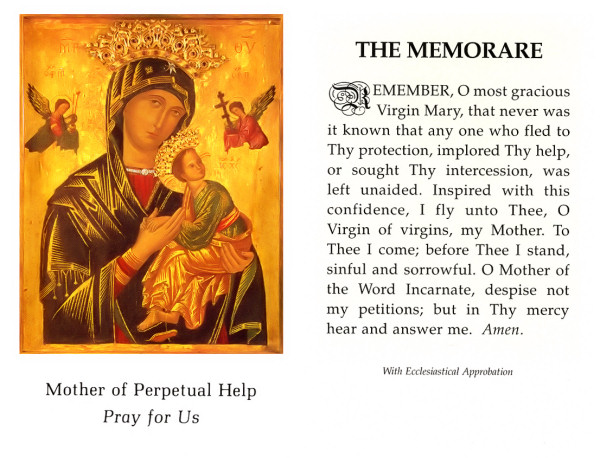
This popular prayer, a favorite of many Catholics, dates back to the 15th century and takes its name from the first Latin word of the prayer, "memorare," which means "remember." The Memorare is of unknown authorship, although it has been attributed to St. Augustine (354-430), St. John Chrysostom (c. 347-407) and, with more reason, to St. Bernard of Clairvaux (c. 1090-1153). St. Bernard's sermons on Mary were famous, and it was his Cistercian monks in the monastery of Citeaux in the 12th century who popularized the name "Our Lady" for Mary. The Memorare has also been attributed to the French cleric Claude Bernard (1588-1641), known as the "poor priest" of Paris, whose homilies contain passages that echo its words. No matter who wrote this prayer, it was Father Bernard who did much to popularize it, teaching it in hospitals and prisons, where Mary's intercession was effective in working miracles of grace. The first manuscript of the Mem...
Comments
Post a Comment